projects
Selected research and course projects spanning medical AI, generative modeling, computer vision, and embodied perception.
research
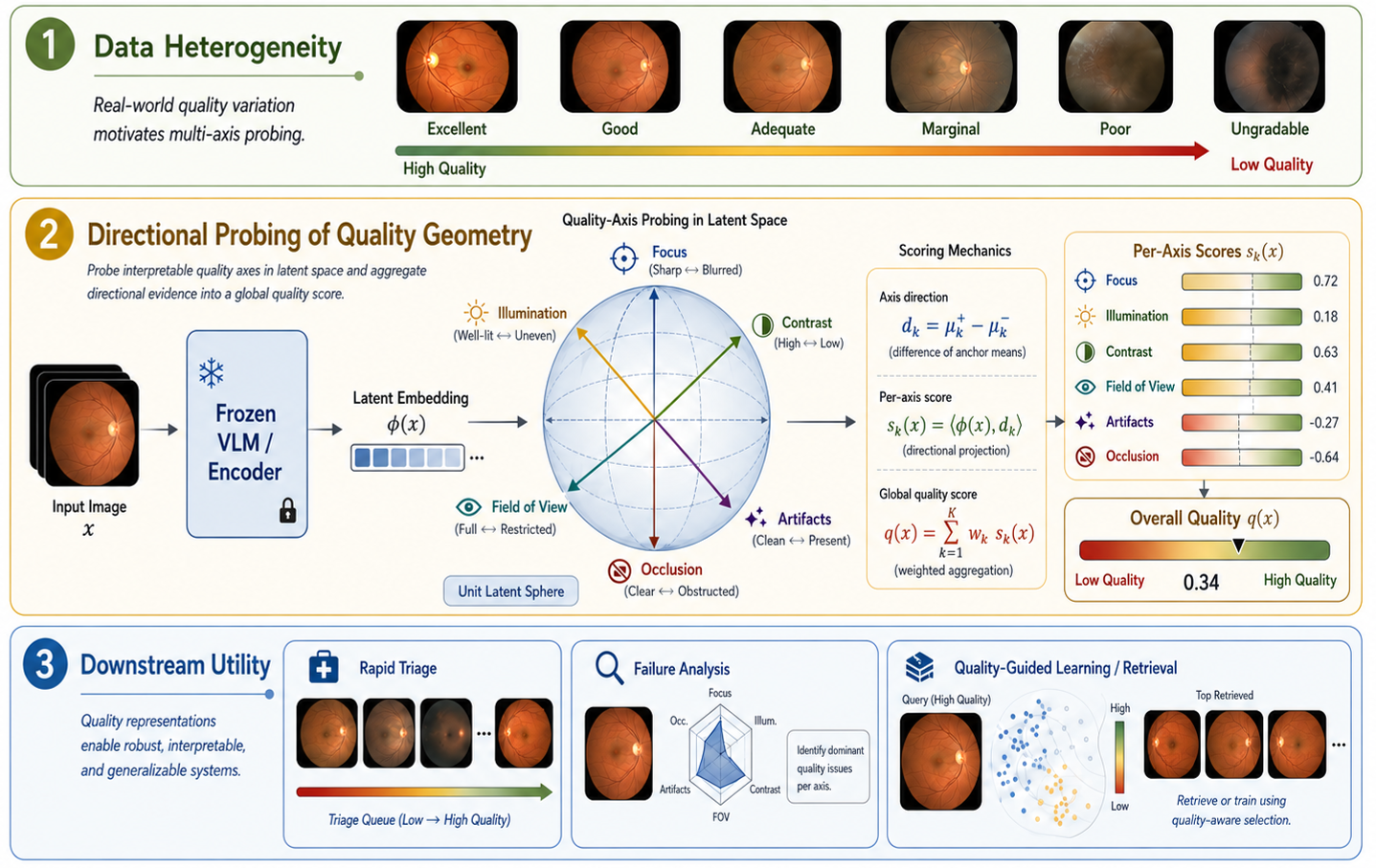
Zero-shot Quality Representation Learning (EyeQC)
ARVO 2026 (Hot Topic)
Can image quality be modeled without a single human quality label? EyeQC asks whether the geometry of a frozen vision-language model already encodes acquisition artifacts as latent directions. By contrasting semantic prompt pairs in CLIP-style embedding space, we induce continuous, multi-axis quality directions — blur, illumination shift, contrast loss, occlusion, field-of-view restriction — without supervised quality scores. In retinal imaging the representation supports failure-mode decomposition, retrieval, and batch-shift analysis. We then use quality as both a confounder and a difficulty prior in a curriculum-based visual-acuity regressor, where the model is trained on easy (clean) cases first and gradually exposed to harder (degraded) acquisitions. The resulting BCVA predictor is calibrated under domain shift and outperforms quality-agnostic baselines on out-of-distribution clinic data.
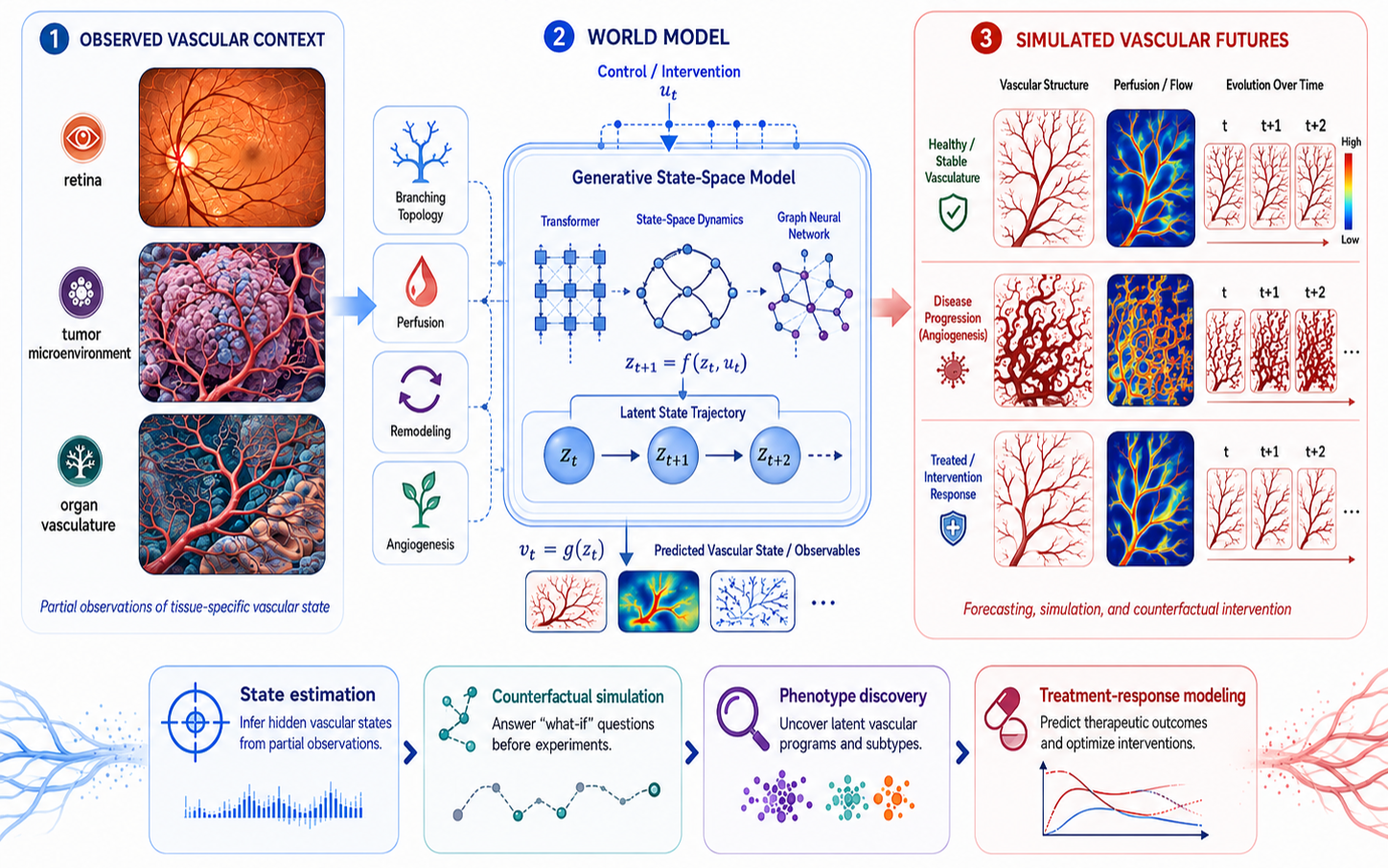
Physics-Consistent Vascular World Models
Madabhushi Lab, Georgia Tech & Emory
Most vascular imaging models treat morphology as a static feature bank. We treat vasculature as a generative state — a structured object whose branching topology, perfusion field, and treatment response are coupled state transitions, not pixel statistics. The vascular world model is conditioned on tissue context, disease state, and intervention, and is constrained to remain consistent with continuity-of-flow and bifurcation laws. The interesting question is not how realistic the synthesized vessels look, but whether the latent trajectory is faithful enough to support counterfactual reasoning: what does this microvasculature look like after a hypothetical therapy, and how does that displacement in latent space correlate with measured outcome?
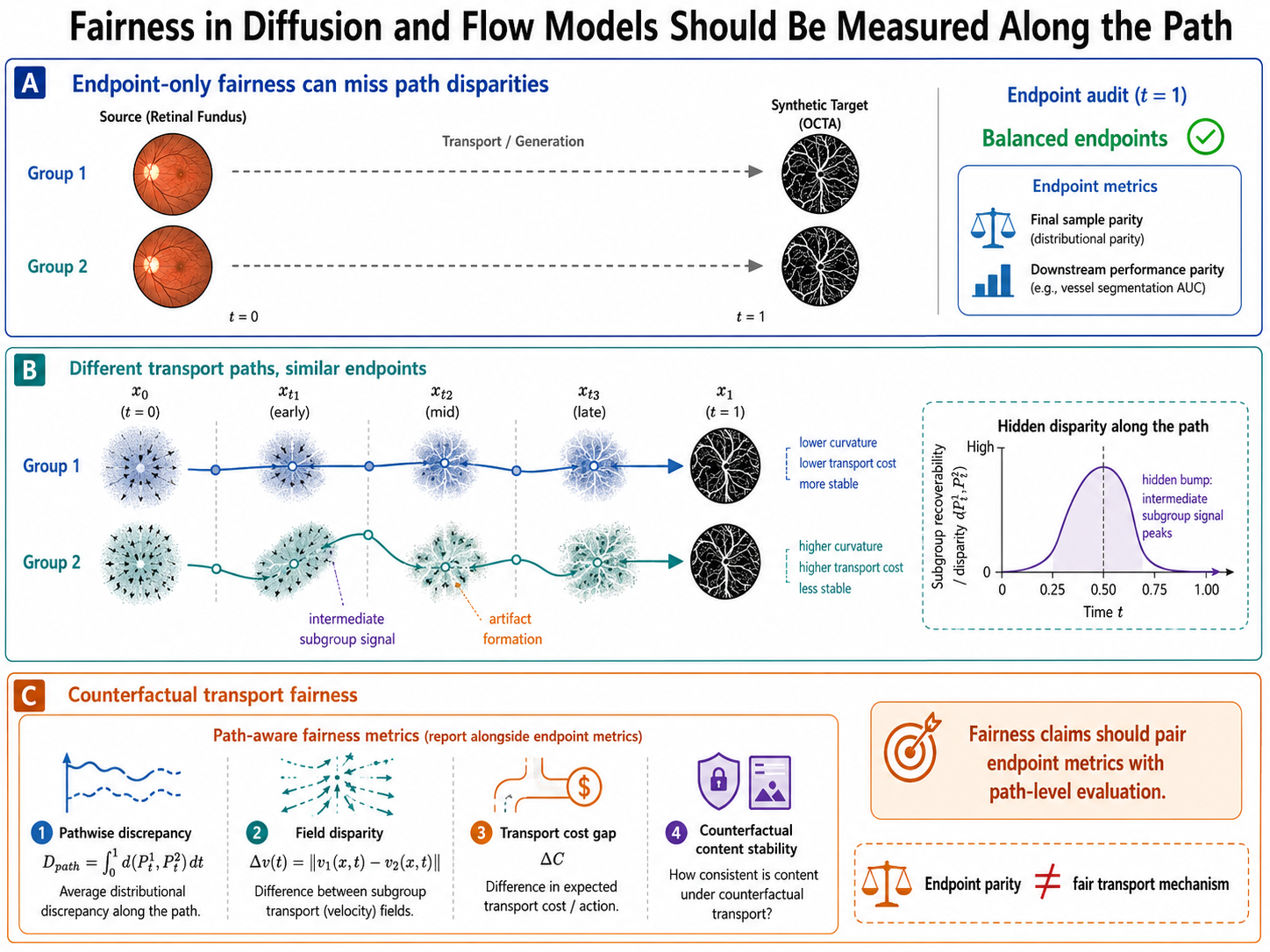
Flow-based Generative Geometry
Under review, NeurIPS 2026
Flow matching, diffusion, and stochastic interpolants all describe the same object — a transport path between noise and data — but they impose very different geometric constraints on that path. We study how the curvature of learned velocity fields, the density concentration along interpolants, and the asymmetry between forward and reverse trajectories actually shape likelihood calibration and sample quality. The motivating observation is that two models with identical FID can have wildly different transport geometries, and the differences predict failure modes the headline metric does not. The work connects to mean-flow-style finite-displacement reformulations and to recent work treating one-step generation as the primary training object rather than a distillation artifact.
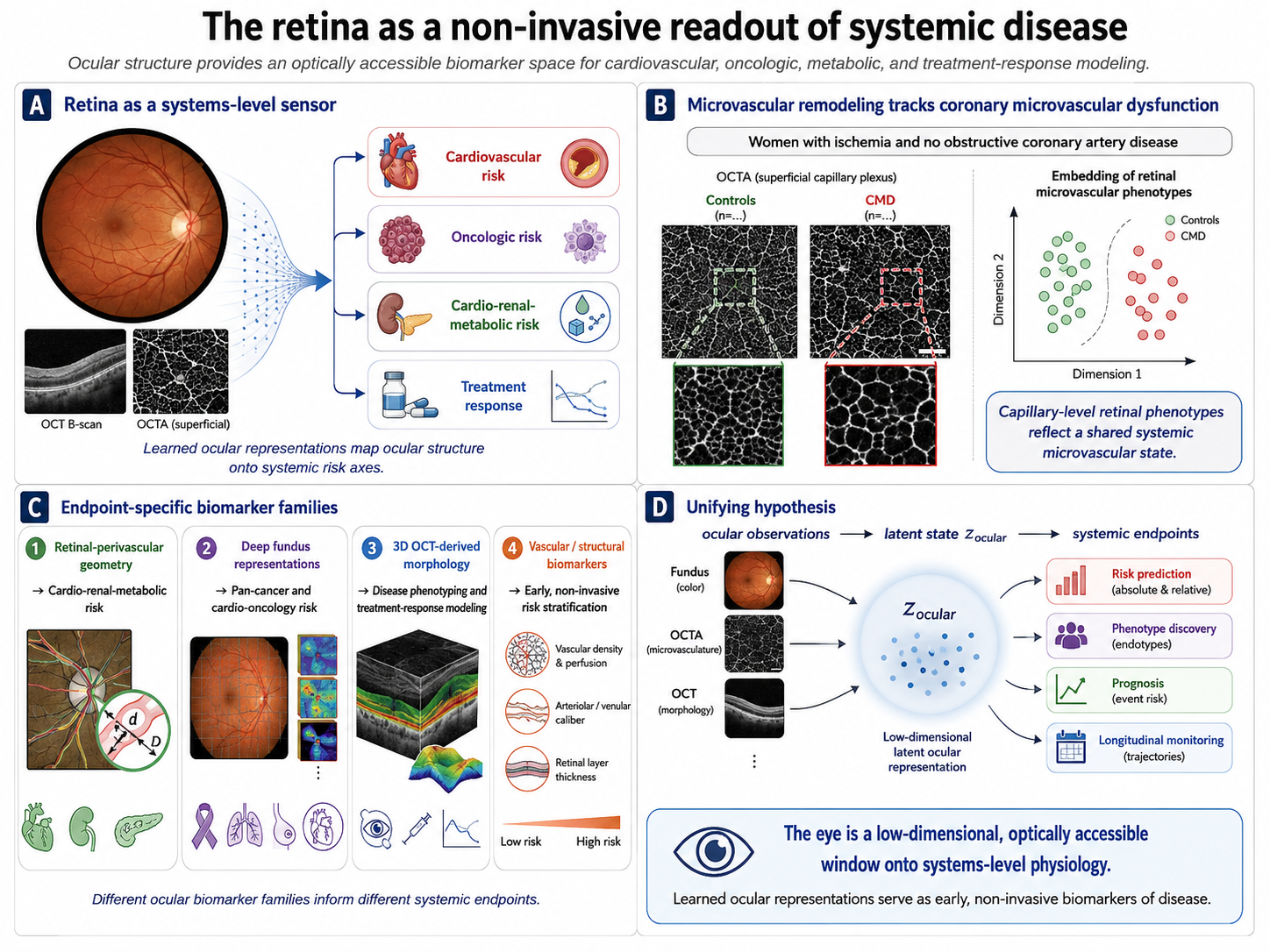
Oculomics for Systemic Risk Modeling
AJPC 2026; ACC 2026
Paper / /
Can the retina act as a non-invasive readout of systemic disease? We build statistical-learning and representation-learning frameworks that project ocular structure onto cardiovascular, oncologic, and metabolic risk axes. In a cohort of women with ischemia and no obstructive coronary artery disease, OCTA-derived microvascular remodeling patterns separate coronary microvascular dysfunction from controls — suggesting that capillary-level retinal phenotypes track a shared systemic microvascular state, not just ocular pathology. We extend this to retinal-perivascular geometry for cardio-renal-metabolic risk, deep fundus representations for pan-cancer and cardio-oncology risk, and 3D OCT morphology for treatment-response modeling. The unifying claim: the eye is a low-dimensional, optically accessible window onto systems-level physiology, and learned ocular representations are early, non-invasive biomarkers of disease.
Embodied Perception & Robot Localization
ACM ICVGIP 2024; Qualcomm Developer Symposium
Paper / /
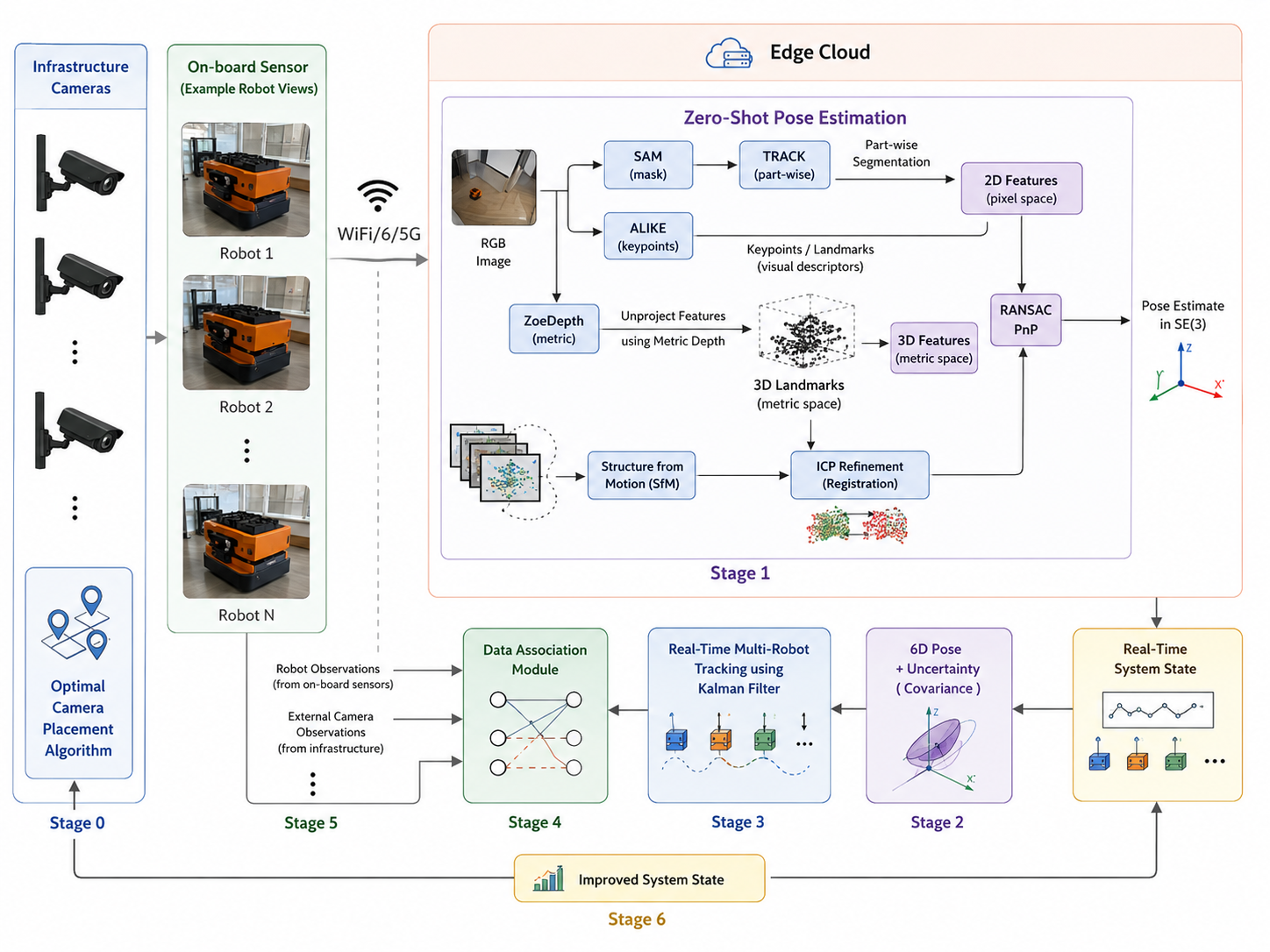
Most SLAM systems quietly assume the same domain at train and test time. We ask what happens when you forbid that assumption: localization must work zero-shot, on a robot the perception model has never seen, in a scene with no fine-tuning. The framework fuses foundation-model visual embeddings with keypoint geometry and spatial consistency constraints, and lifts RTAB-Map accuracy by more than 63% without any task-specific training. Companion work extends the perception stack to differentiable 3D scene representation with anisotropic Gaussian primitives and SE(3) pose refinement, uncertainty-aware multi-robot perception under occlusion, and neural compression for real-time 6-DoF pose estimation on Qualcomm RB5 — 3x speedup at less than 2% accuracy degradation.
Wearable AI for Cognitive Health
AMIA 2025 (Podium); PLOS Digital Health (under review)
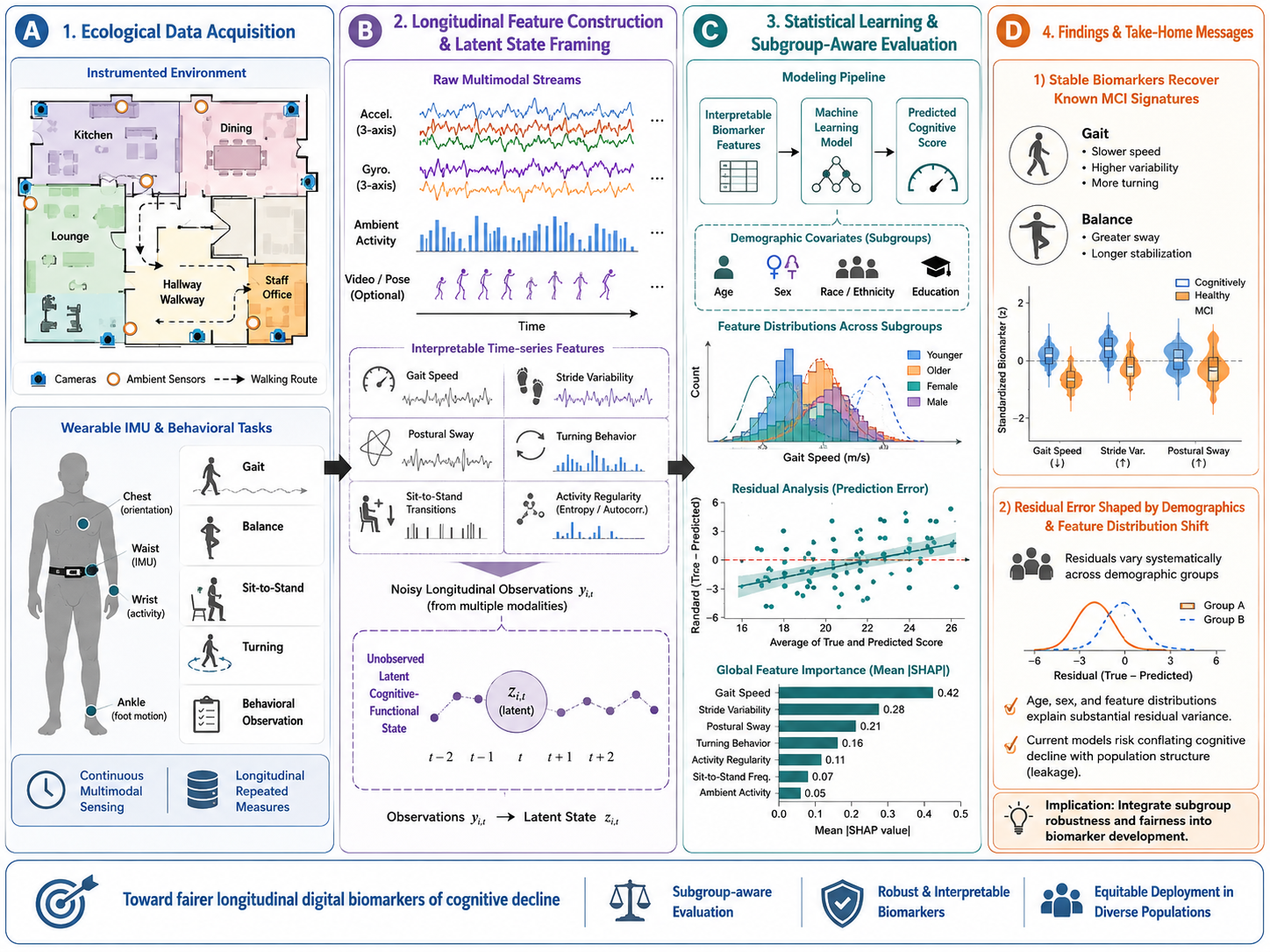
Wearable sensing promises continuous, ecological measurement of cognitive function — but most digital-biomarker pipelines collapse rich longitudinal observation into a single classifier output, and most evaluations under-report subgroup behavior. We formulate gait, balance, and behavioral signals from IMU + ambient sensors as noisy longitudinal observations of an unobserved cognitive and functional state, and ask which features remain stable across heterogeneous patient groups. The interpretable feature set recovers known MCI gait and balance biomarkers, but the more interesting finding is in the residuals: demographic covariates and feature distributions explain a large share of model error, suggesting that current wearable AD models conflate cognitive decline with population structure.
LLM Reasoning in Medicine
ICLR 2026 Workshop on Logical Reasoning of LLMs; Stanford AIMI Symposium
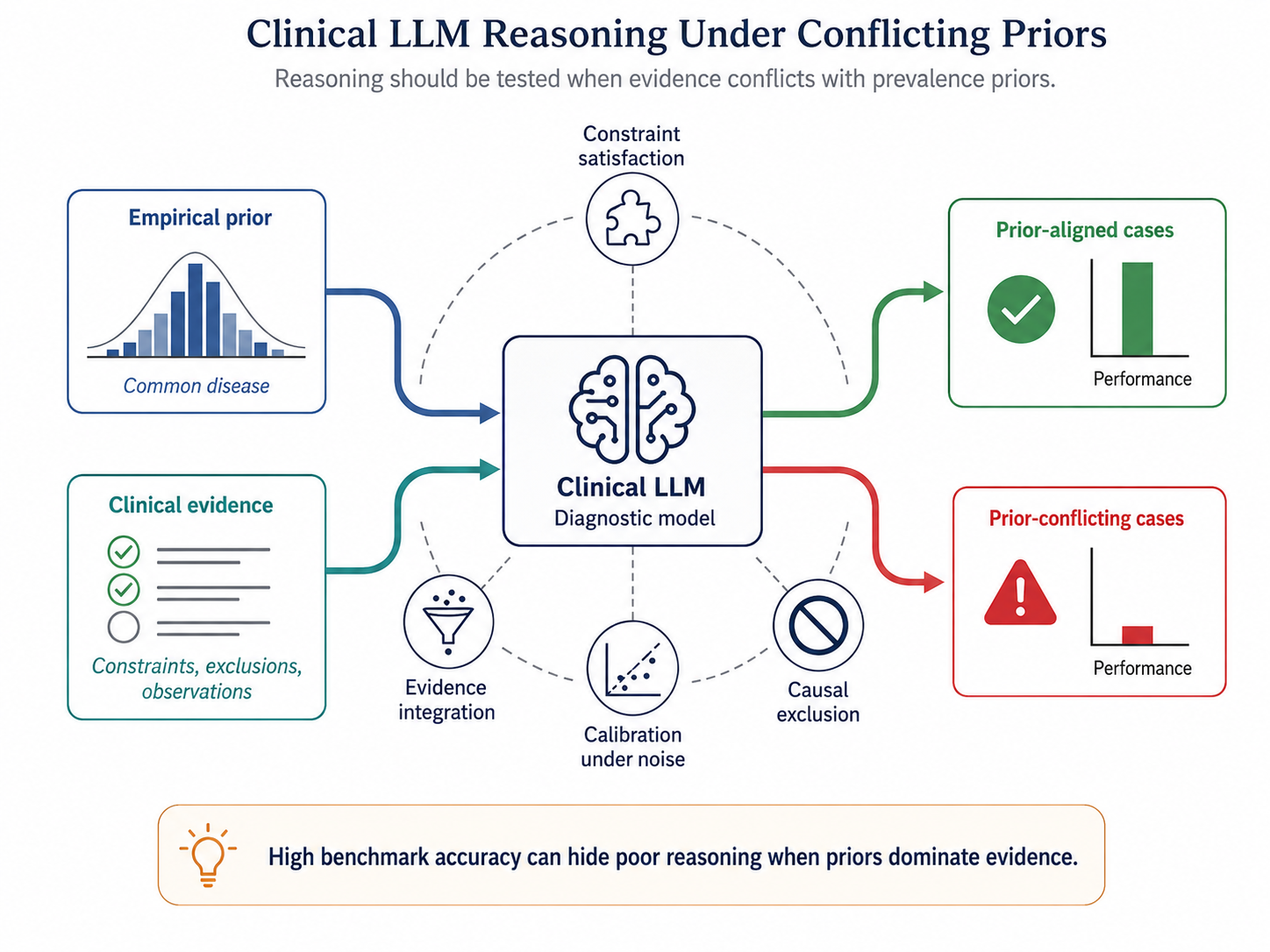
When a clinical LLM correctly diagnoses a common disease, has it reasoned, or has it just sampled from the empirical distribution of medical text? We design diagnostic cases where the correct answer is *not* the most prevalent answer — where constraint satisfaction, causal exclusion, and evidence integration push against the prior. Across frontier LLMs the gap is large and consistent: high accuracy on prevalent presentations, sharp collapse when the prior contradicts the constraints. The work reframes medical LLM evaluation around four operational primitives — constraint satisfaction, causal exclusion, evidence integration, calibration under noisy observations — rather than aggregate accuracy on distribution-matched benchmarks. The implication: published medical-LLM benchmarks may be measuring memorized epidemiology rather than reasoning.
Frequency-Disentangled Generative Modeling
Madabhushi Lab, Georgia Tech & Emory
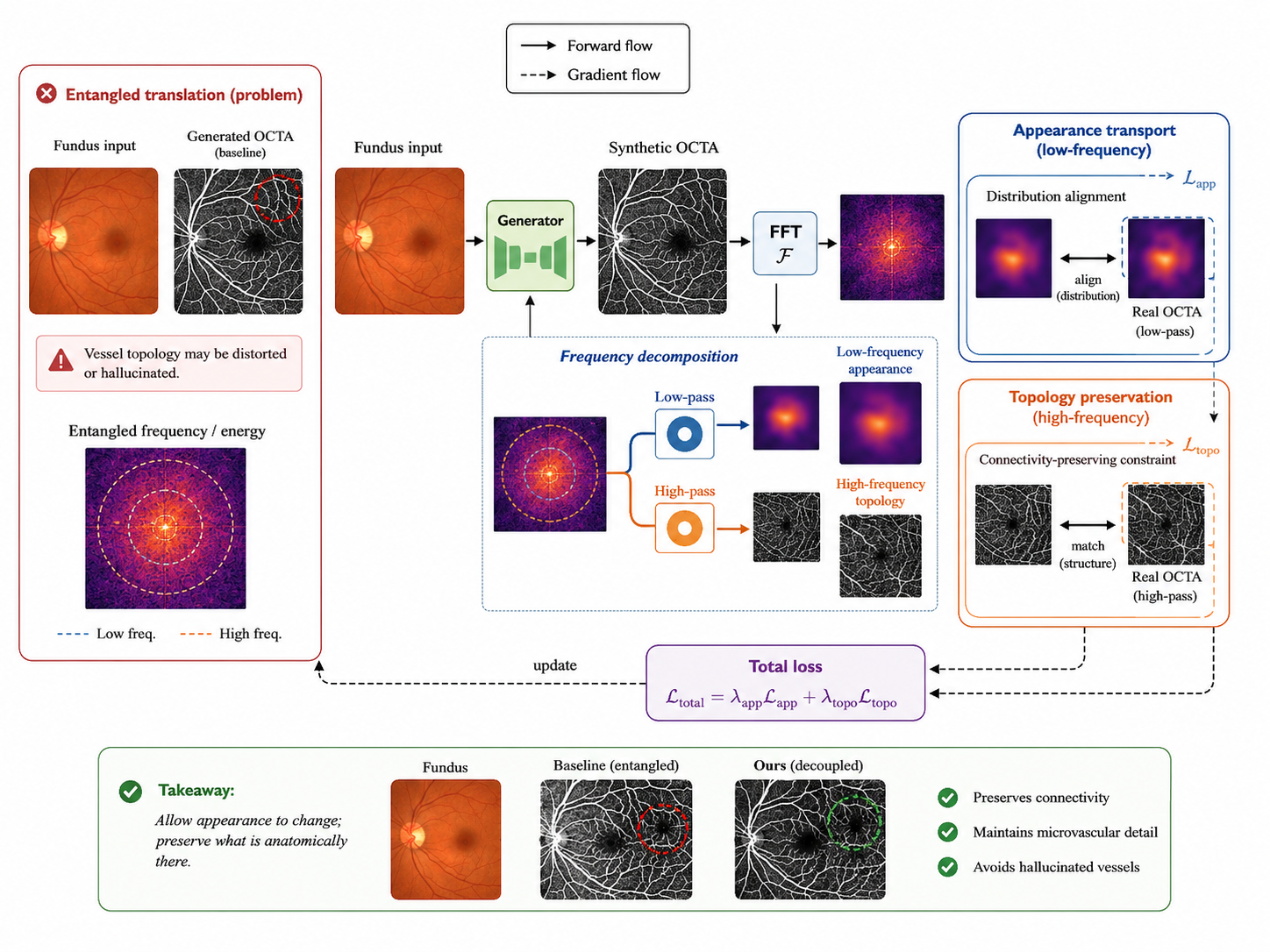
Standard image-to-image translation networks happily hallucinate plausible-looking vessels that do not exist. For medical synthesis this is dangerous — the topology is the diagnostic content. We factorize unpaired cross-modal translation into low-frequency appearance transport (modality-specific intensity statistics) and high-frequency anatomical topology preservation (vessel geometry, connectivity, microvascular structure). The model is allowed to change what fundus imaging looks like, but is forbidden from changing what is actually there. Applied to fundus-to-OCTA synthesis, this reframes medical image generation as structure-preserving distribution alignment under weak supervision — closer to a physical inverse problem than to stylistic transfer.
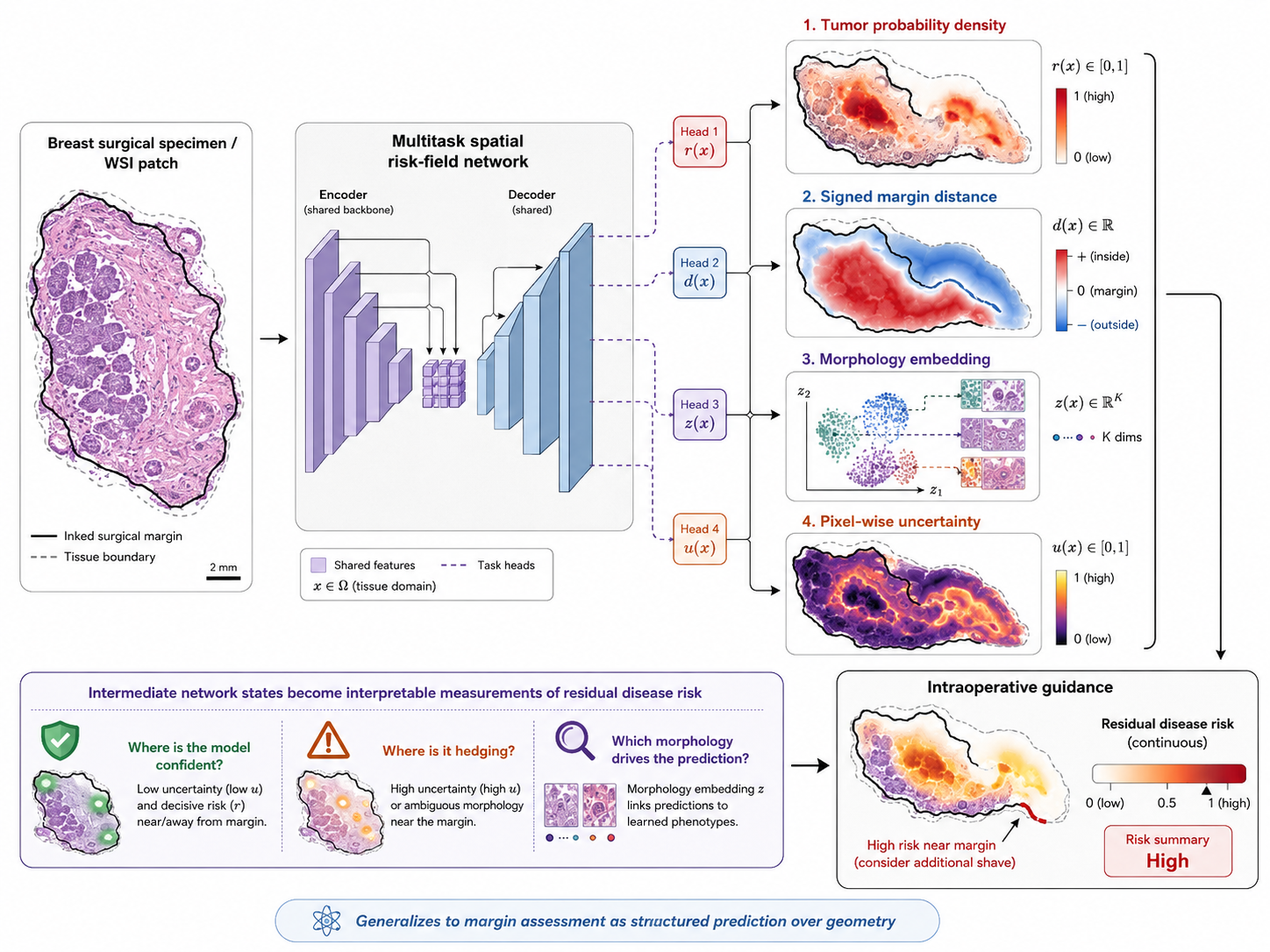
Spatial Risk-Field Learning for Surgical Margins
ARPA-H Collaboration
Surgical margin assessment is usually reported as a single number — positive or negative — but the underlying object is a continuous spatial risk field over tissue geometry. We train a multitask network that learns four coupled views of that field simultaneously: tumor-probability density, signed margin-distance, morphology embedding, and pixel-wise uncertainty. The intermediate network states stop being opaque scores and become interpretable measurements of residual disease risk: surgeons can read off where the model is confident, where it is hedging, and which morphological cues drive the prediction. The framework is built for intraoperative breast-cancer resections in collaboration with ARPA-H, but the structural-prediction-over-geometry formulation generalizes to any margin-assessment task.
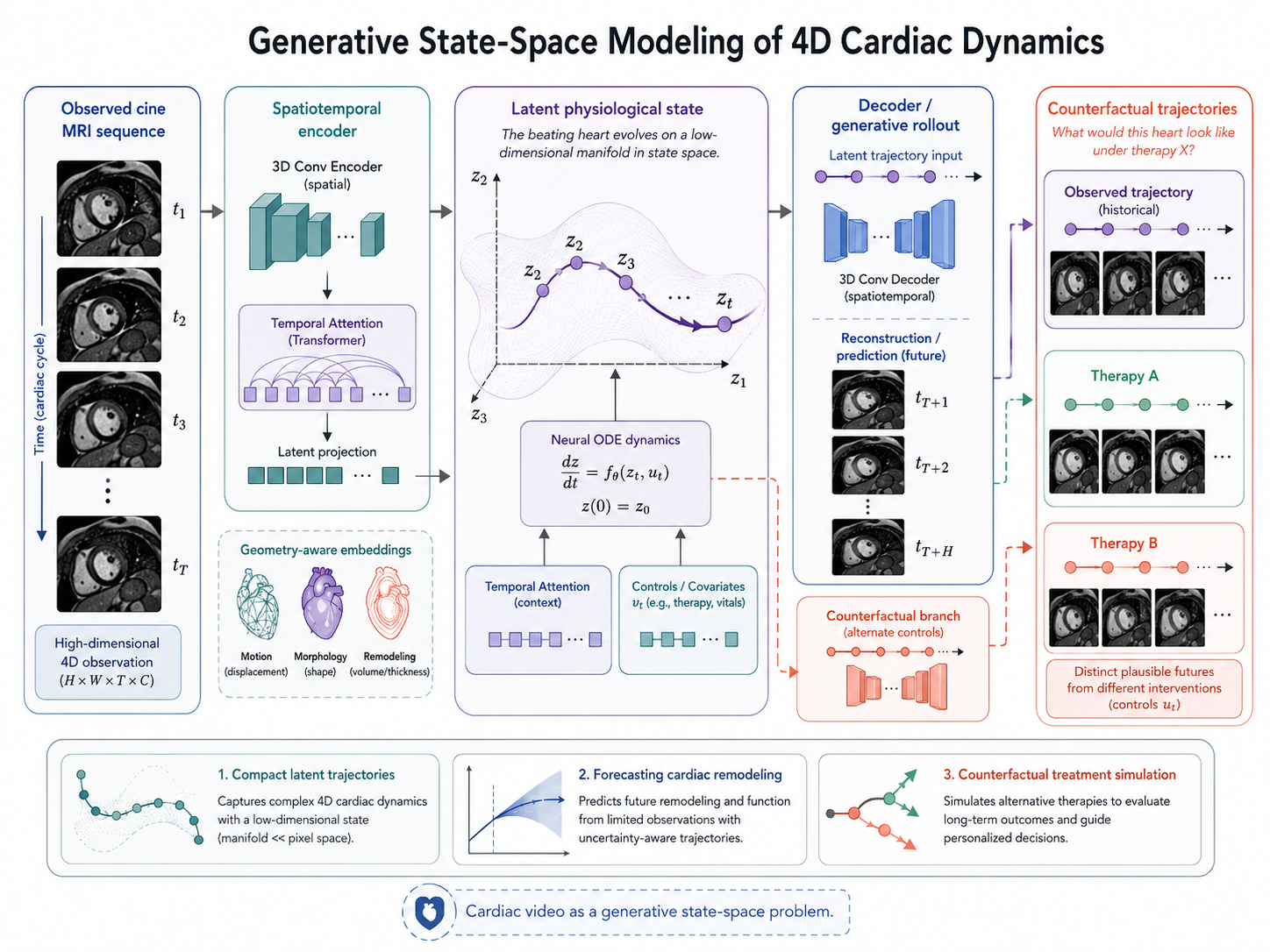
Generative State-Space Modeling of 4D Cardiac Dynamics
In preparation
Cine cardiac MRI is a 4D observation of a low-dimensional physiological state — a beating heart whose motion, morphology, and remodeling lie on a much smaller manifold than the pixel space implies. We frame cardiac video as a generative state-space problem and learn compact latent trajectories from spatiotemporal sequences, combining representation learning, temporal attention, neural ODE dynamics, geometry-aware embeddings, and counterfactual rollouts. The clinical motivation: counterfactual trajectories ('what would this heart look like under therapy X?') are unavailable from supervised classification but natural in a generative state-space view.
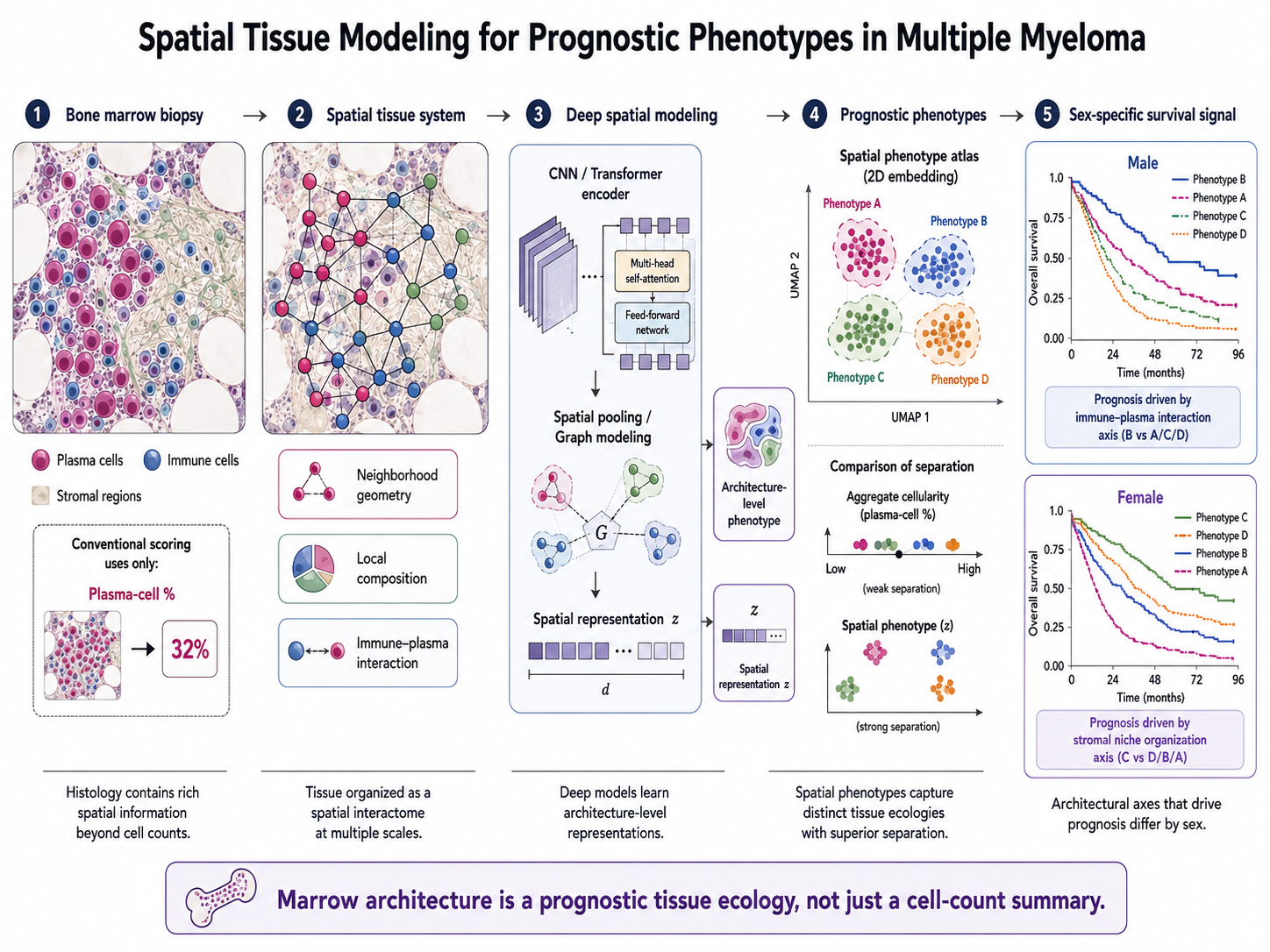
Spatial Pathology Biomarkers in Multiple Myeloma
AACR 2026
Bone-marrow biopsies in multiple myeloma are usually scored by plasma-cell percentage — a single number summarizing a richly structured tissue ecology. We treat the marrow as a spatial system: plasma cells, immune cells, and stromal compartments laid out in patterns that encode neighborhood geometry, local composition, and immune-plasma interaction. Using spatial tissue modeling and deep learning, we extract architecture-level phenotypes and find that they separate overall survival in ways aggregate cellularity does not — and that the separation is sex-specific, with male and female patients drawing on different architectural axes for prognostic signal. The implication: sex effects in MM survival may be partly mediated by differences in marrow architecture, not just hormonal or genetic factors.
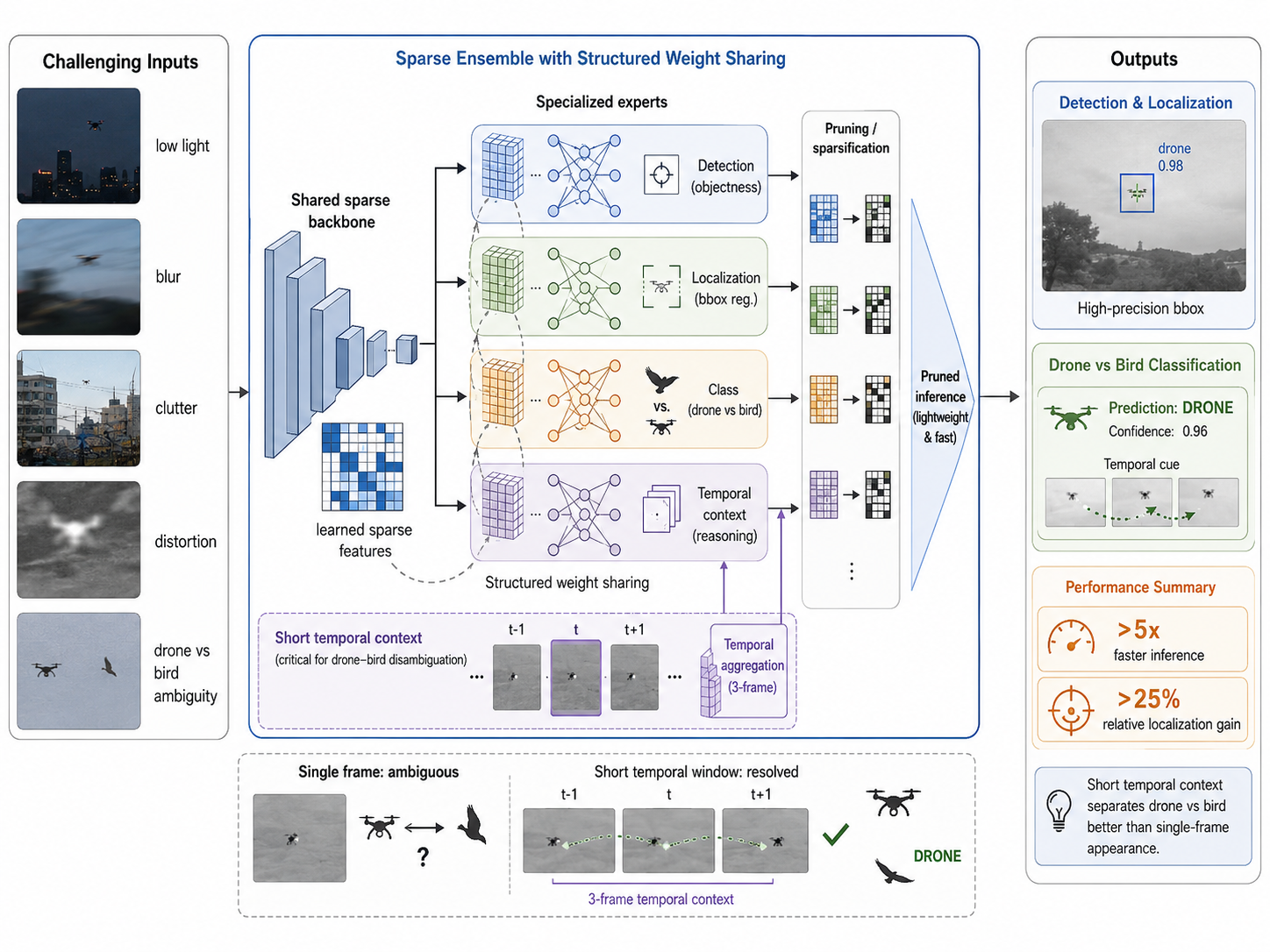
Sparse Ensemble Networks for UAV Detection
IEEE MysuruCon 2022; ICASSP 2023; ICIP 2023 Challenge; IEEE CONNECT 2026
Paper / /
Miniaturized UAV detection is a small-object problem under aggressive conditions: low illumination, sensor distortion, clutter, motion blur, and a class boundary (drone vs. bird) that is genuinely hard. We build sparse ensemble networks that train multiple specialized detectors with structured weight-sharing, then prune aggressively at inference. The result is more than 5x inference speedup and more than 25 percent relative improvement in localization, with the additional finding that the drone-vs-bird boundary is most cleanly resolved by short-temporal-context features rather than single-frame appearance. Deployed in the IEEE ICIP 2023 Grand Challenge on infrared drone tracking.
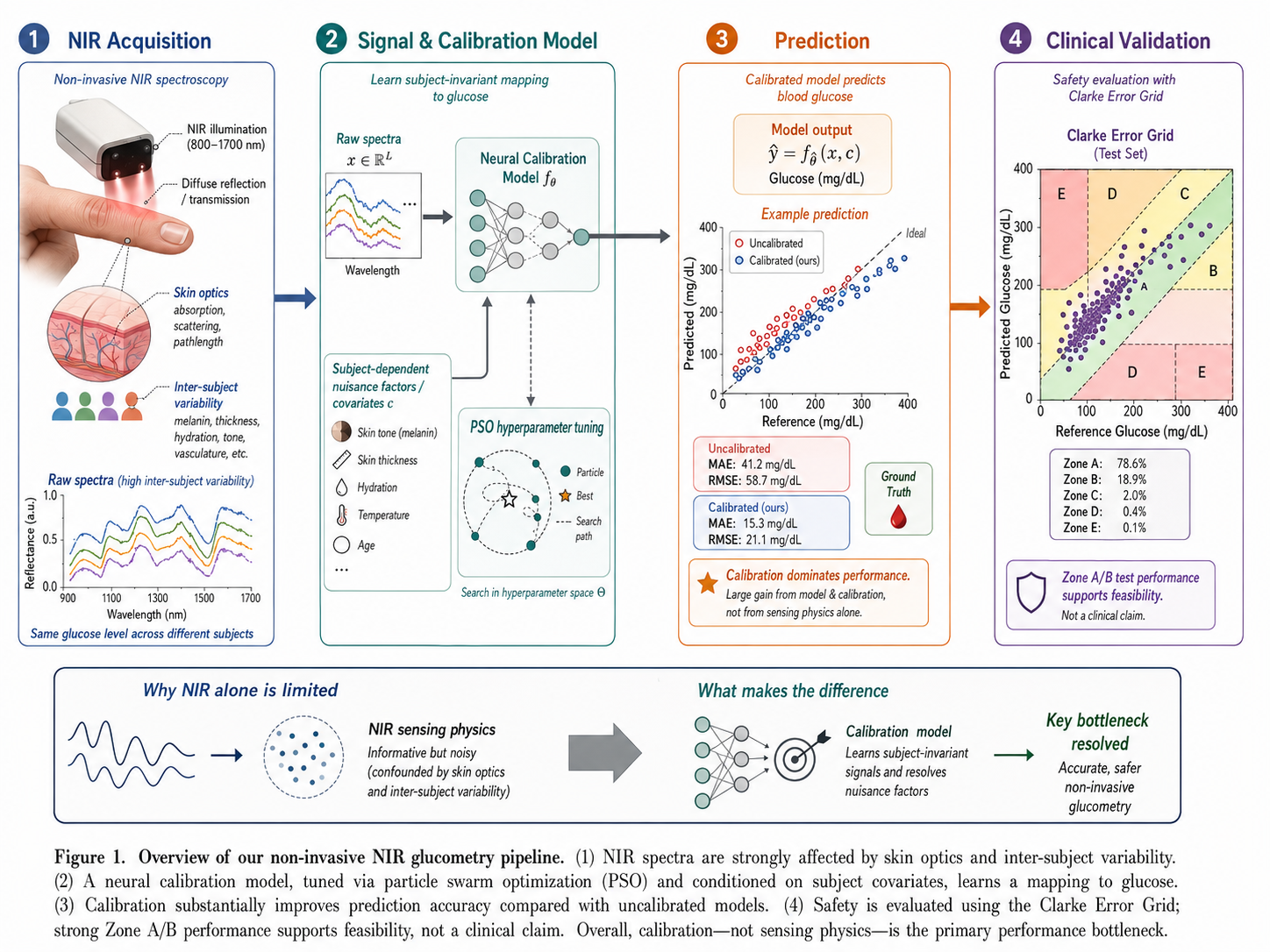
NIR Spectroscopy Non-Invasive Glucometer
TechRxiv 2023
Near-infrared spectroscopy can in principle estimate blood glucose without a finger prick, but in practice the signal is dominated by inter-subject variability and skin optics. We build a NIR sensing front-end paired with a neural calibration model whose hyperparameters are tuned by particle-swarm optimization. The pipeline is validated on the Clarke Error Grid, the standard for clinical glucometer safety, and reaches Zone A/B performance on the test cohort. The result is more a feasibility statement than a clinical claim, but it suggests that the limiting factor in non-invasive NIR glucometry is calibration, not sensing physics.
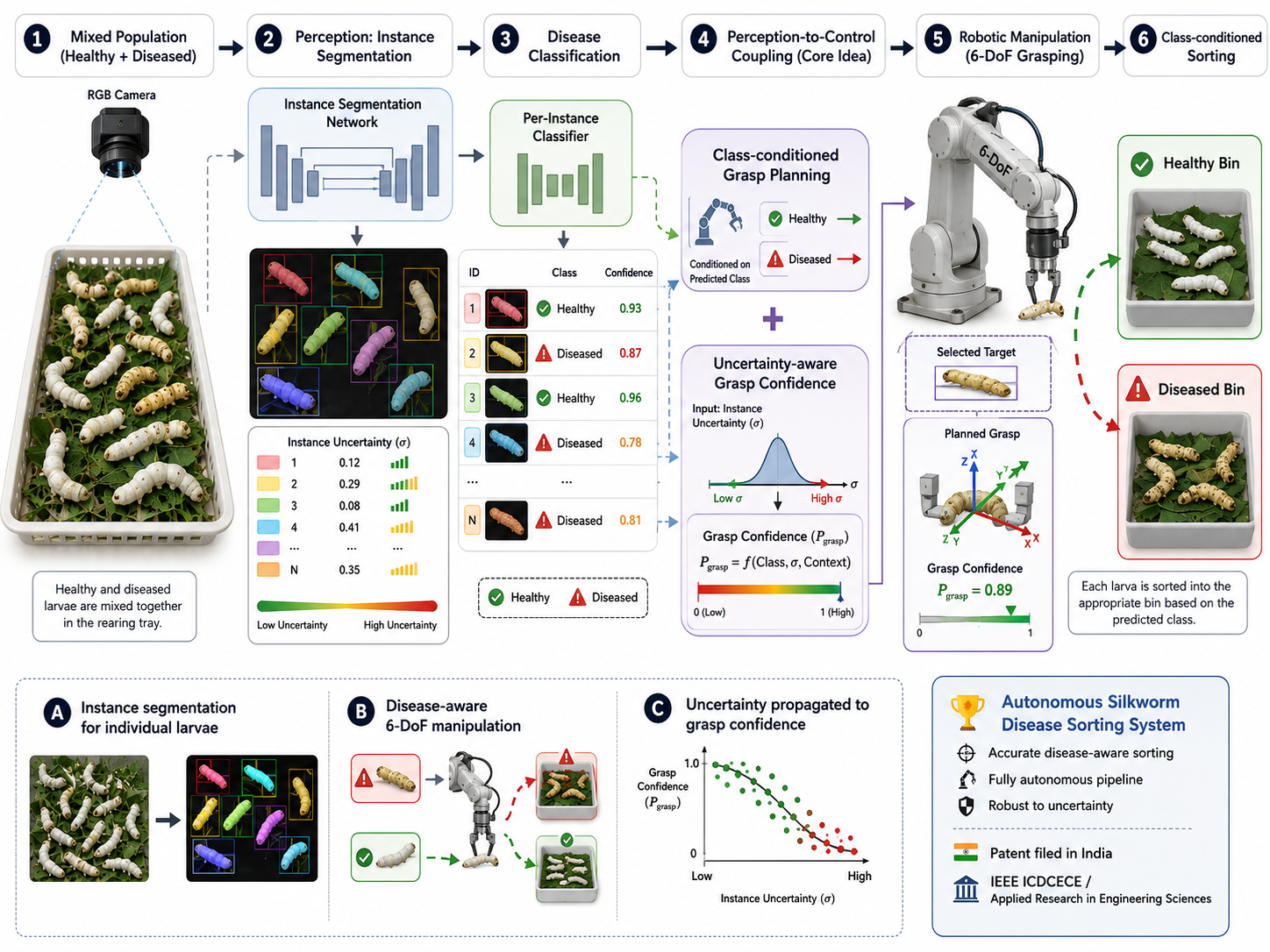
Vision-Guided Robotic Manipulation for Sericulture
IEEE ICDCECE 2022; Patent (India); Applied Research in Engineering Sciences 2026
Sericulture (silk farming) loses substantial yield to silkworm disease, and disease sorting is still mostly manual. We build an autonomous sorting system that combines instance segmentation for individual silkworms with 6-DoF inverse-kinematics control for grasp planning and class-conditioned manipulation. The interesting engineering choice was not the segmentation model but the coupling between perception and control: condition the grasp policy on the predicted disease class so that healthy and diseased silkworms are placed differently, and propagate segmentation uncertainty into grasp confidence. Patent filed in India; method published in IEEE ICDCECE and Applied Research in Engineering Sciences.
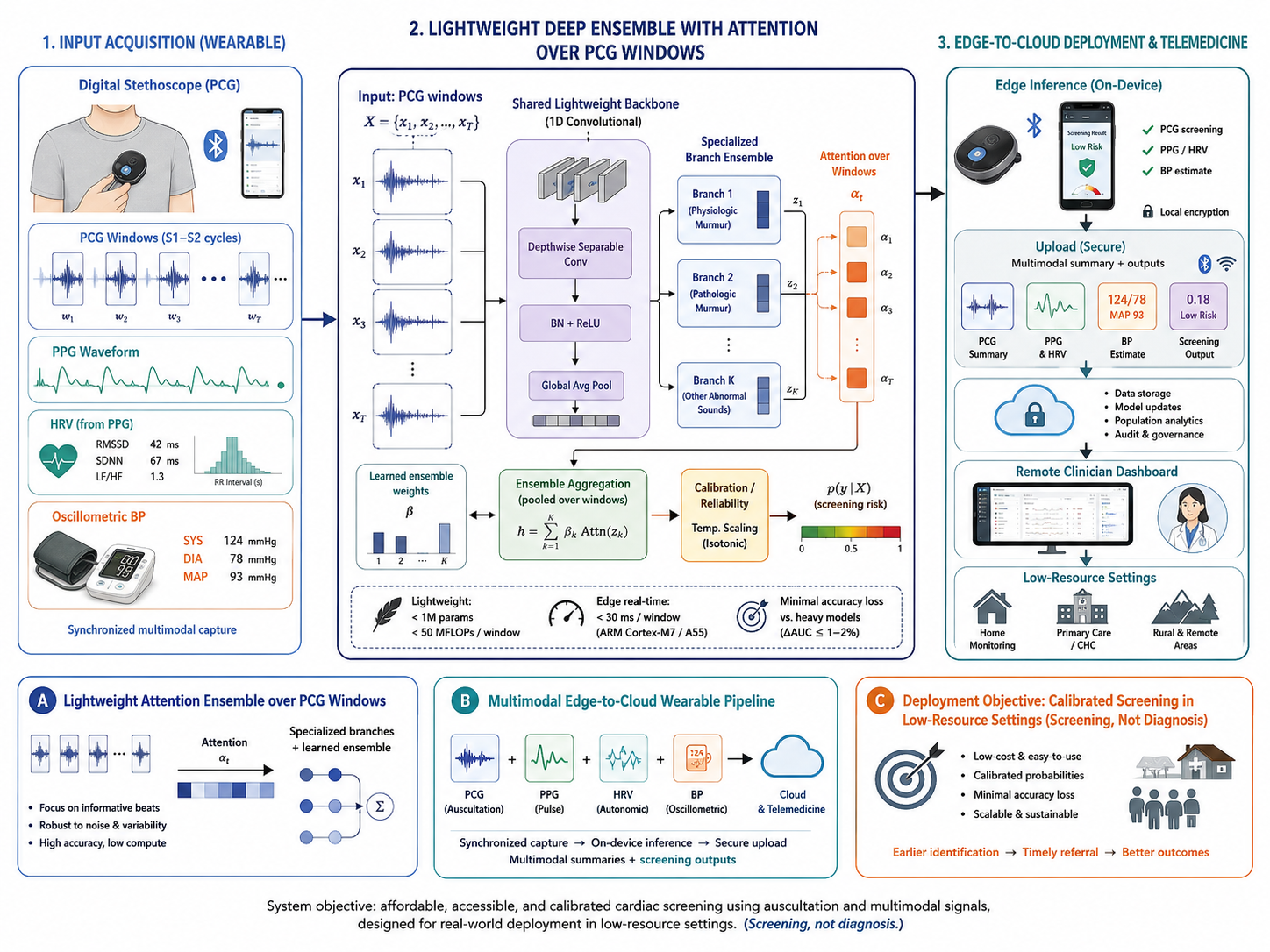
Lightweight Cardiac Sound Classification
Systems Science and Control Engineering, 2024
Auscultation-based cardiac screening is cheap and ubiquitous, but model deployment is bottlenecked by compute, not accuracy. We build a lightweight deep ensemble with attention mechanisms over phonocardiogram windows, designed to fit comfortably on edge hardware. The model is then embedded in an edge-to-cloud wearable system that also captures PPG, derives HRV, performs oscillometric blood-pressure estimation, and uploads to a telemedicine layer. The clinical claim is conservative — this is screening, not diagnosis — but the system-level claim is that a calibrated low-cost auscultation pipeline can be deployed in low-resource settings without giving up much accuracy.
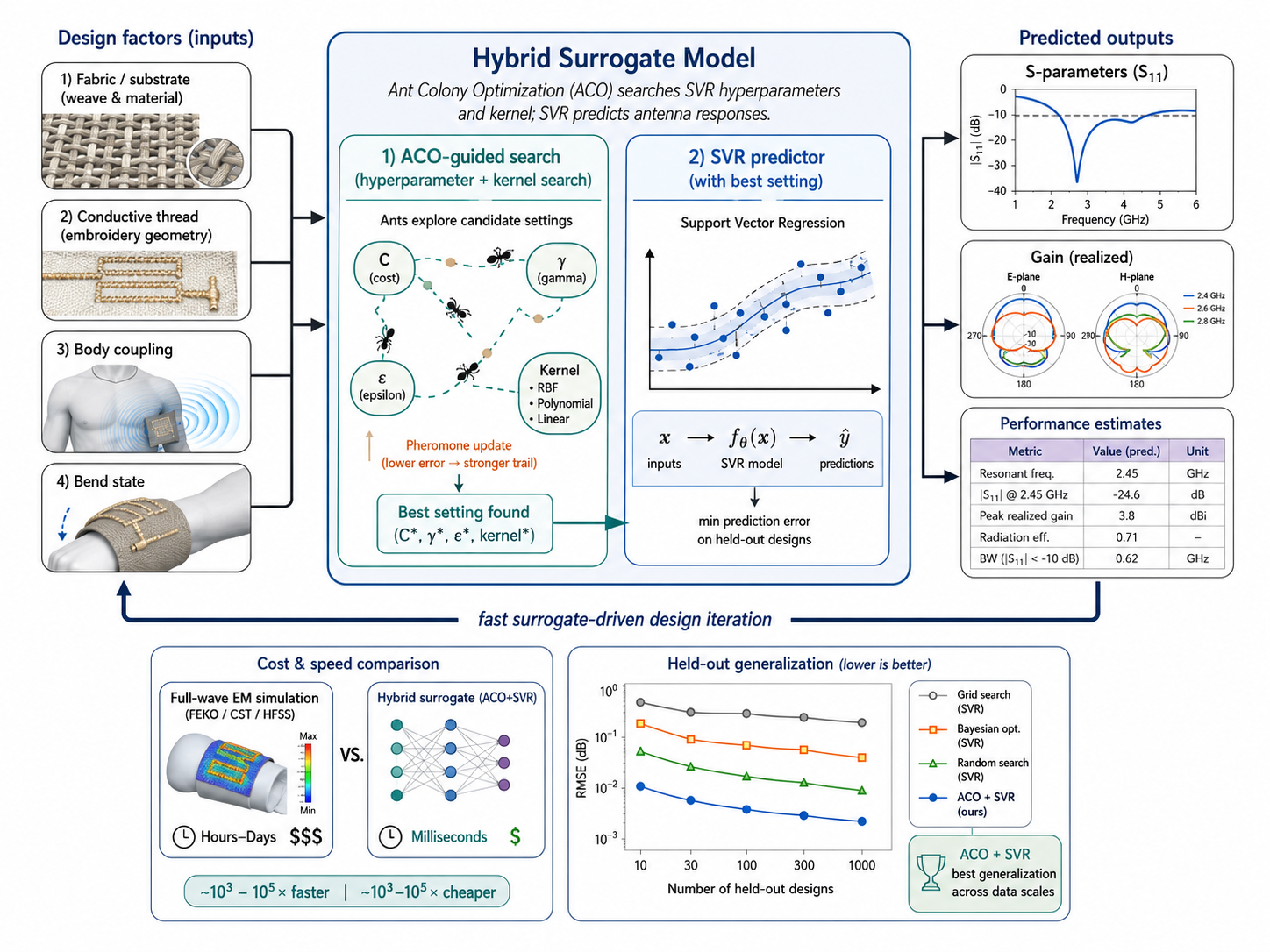
Wearable Textile Antenna Performance Prediction
IEEE GCITC 2023
Wearable textile antennas are notoriously hard to design — performance depends on substrate weave, conductive thread geometry, body coupling, and bend state, all of which interact non-linearly. We use ant-colony-optimized support vector regression to predict S-parameters and gain across the design space, treating ACO as a hyperparameter and kernel search rather than as the optimizer for the antenna geometry itself. The hybrid surrogate is cheap enough to replace full-wave simulation inside an iterative design loop, and on the held-out designs it generalizes better than grid-search and Bayesian-optimization baselines.
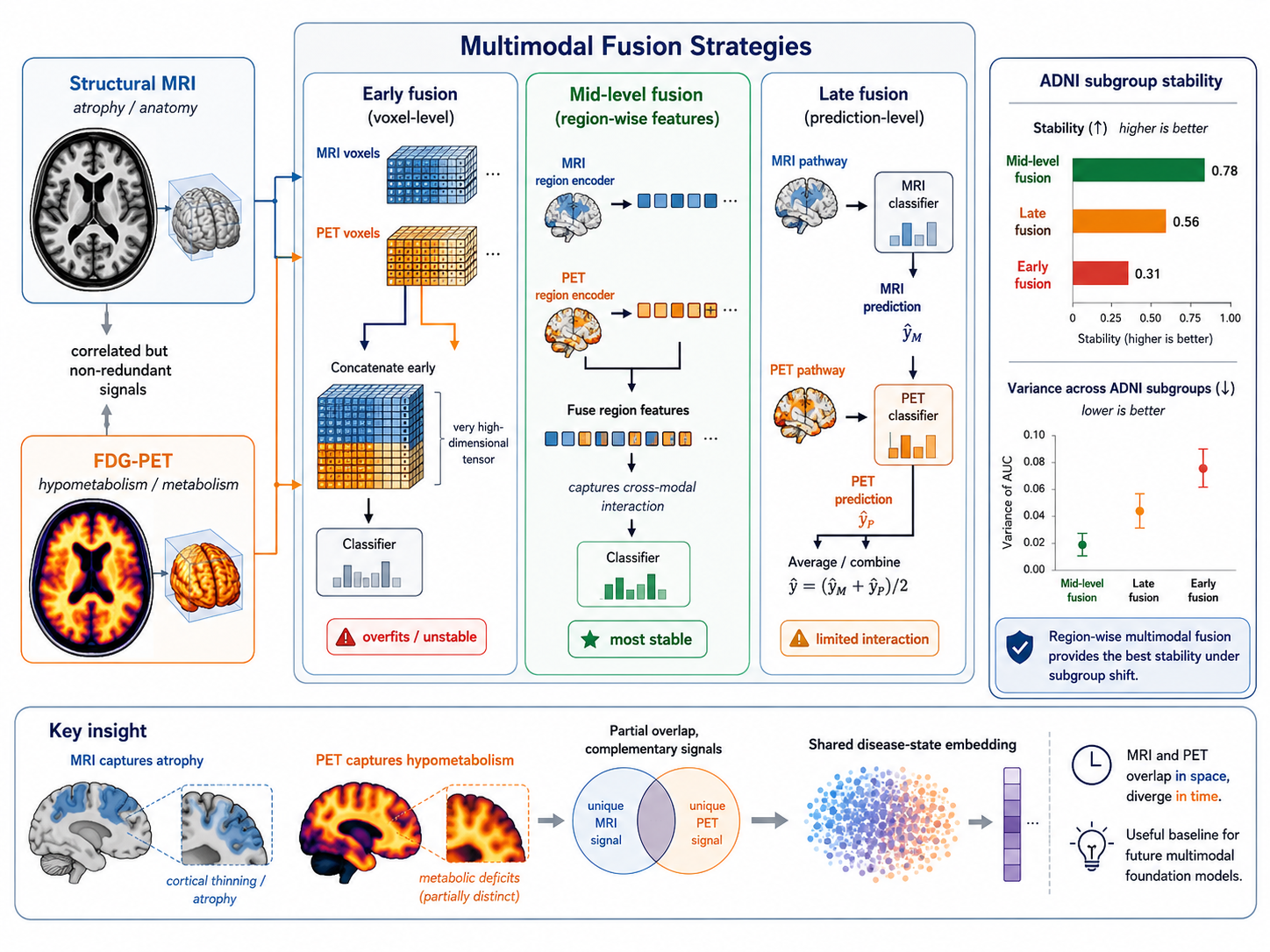
Multimodal Neuroimaging for Alzheimer's Disease
IEEE I4C 2022; J. Machine Learning for Modeling & Computing 2023
Alzheimer's disease produces correlated but non-redundant signals in structural MRI and FDG-PET — atrophy and hypometabolism that overlap in space but diverge in time. We compare classification pipelines that fuse MRI and PET at different representation levels (early voxel concatenation, mid-feature fusion, late prediction averaging) and find that mid-level fusion of region-wise features is the most stable on ADNI subgroups, while early voxel fusion overfits and late fusion underuses cross-modal interaction. The result is unsurprising, but the experiment was useful as a baseline against which more sophisticated multimodal foundation models can be measured.
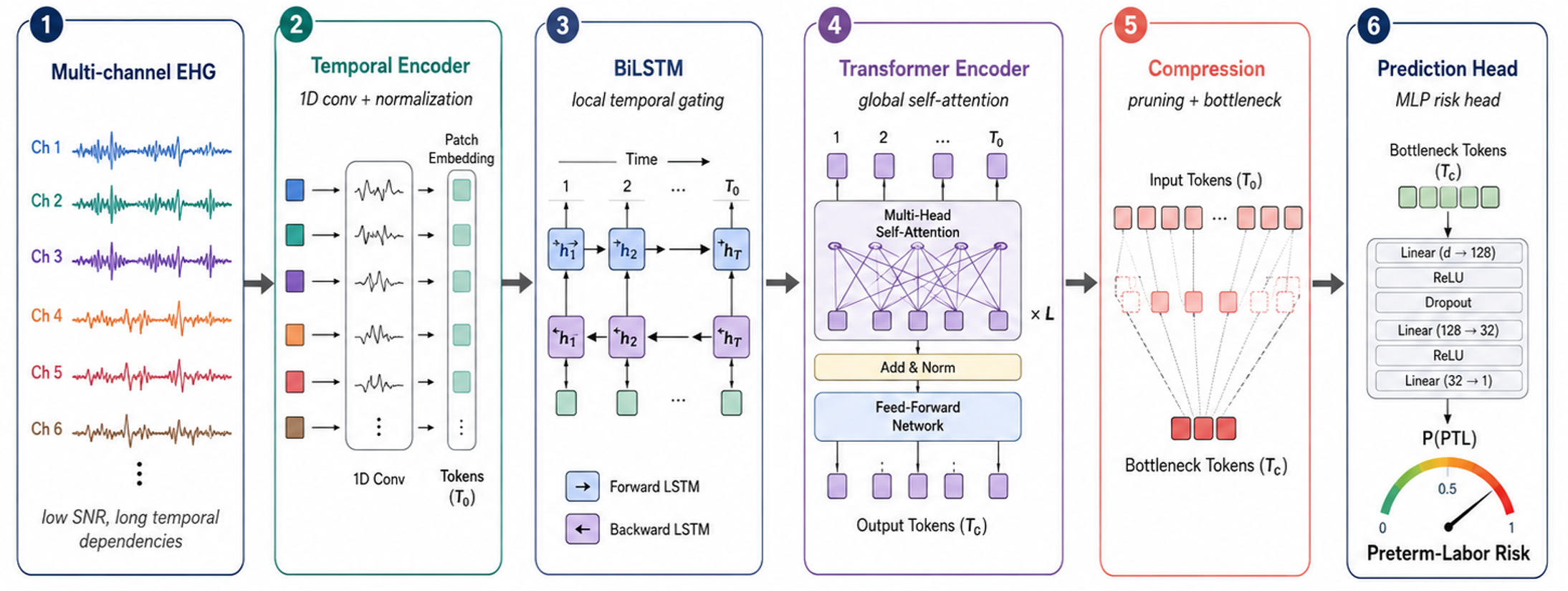
Hybrid Bi-LSTM-Transformer for Preterm-Birth Prediction
Biomedical Engineering: Applications, Basis and Communications, 2023
Electrohysterogram (EHG) signals carry information about preterm-labor risk hours before clinical onset, but the signal is multi-channel, low SNR, and dominated by long-range temporal dependencies. We pair a bidirectional LSTM (for temporal gating) with a Transformer (for global self-attention) and add neural-compression layers to keep the model deployable. On the public EHG cohort the hybrid model reaches above 96 percent accuracy with more than 3x inference speedup over the uncompressed baseline. The architectural takeaway: for moderately long biomedical time series, LSTM + attention beats either alone, and the gain comes from short-range gating rather than from the attention layer.
course projects
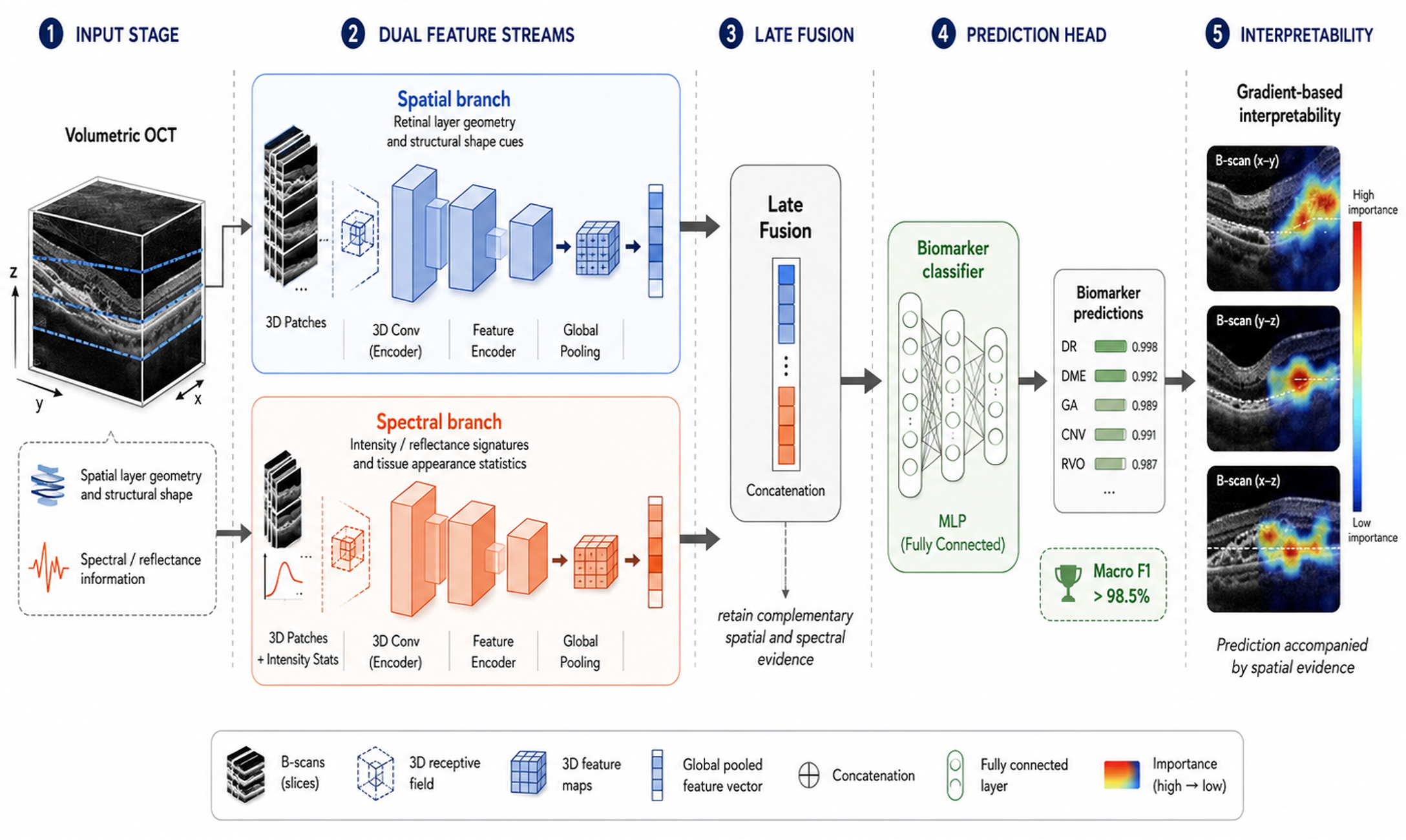
3D OCT Biomarker Detection
ECE 8803 Final Project, Georgia Tech
Code /
Volumetric OCT carries both spatial structure (retinal layer geometry) and spectral/intensity structure (tissue reflectance signatures), and most biomarker classifiers throw one of them away. We use a multi-branch model that processes spatial and spectral feature streams in parallel, fuses them at a late stage, and exposes gradient-based interpretability maps so that biomarker predictions are accompanied by spatial evidence. Macro F1 above 98.5 percent on the held-out cohort. The course-project framing kept the scope modest, but the multi-stream + late-fusion architecture has informed how I think about 3D OCT representation learning more broadly.